During a scheduled service and non-destructive testing (NDT) inspection, a defect was identified in the access ring of the boiler. Following the survey, the NDT inspector issued a detailed report, which allowed us to develop a comprehensive method statement and repair schedule for performing a D-patch repair.
The repair process was carried out systematically to ensure both safety and compliance with industry standards:
Defect Identification and Marking: Upon arriving on-site, the faulty area of the access ring was clearly marked for removal, ensuring precision and accuracy in repair work.
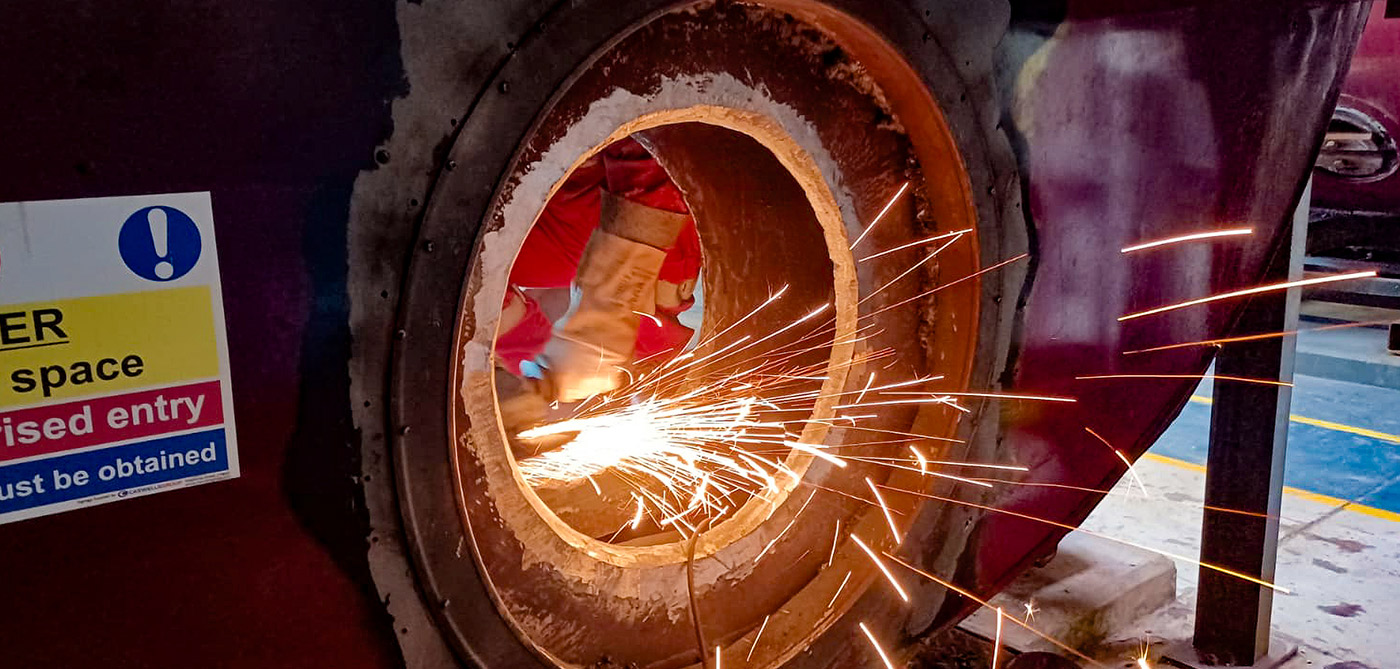
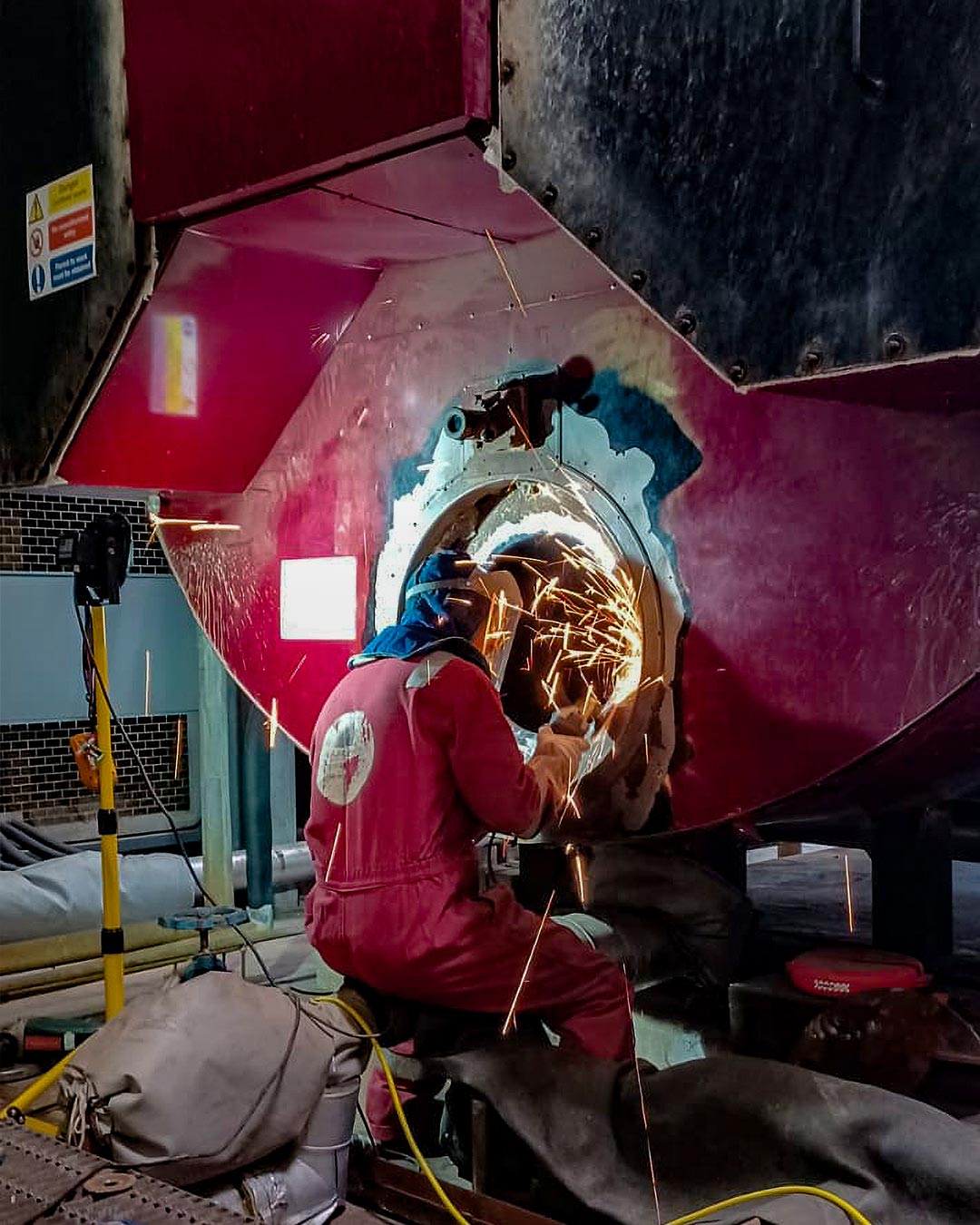
Material Removal: The defective section was cut out using an oxy-propane torch, creating a controlled opening for the new patch.
Surface Preparation: The cut edges underwent weld preparation, including beveling and cleaning, to ensure an optimal bonding surface.
Patch Fabrication: A custom patch was manufactured and accurately shaped to match the boiler’s curvature and dimensions.
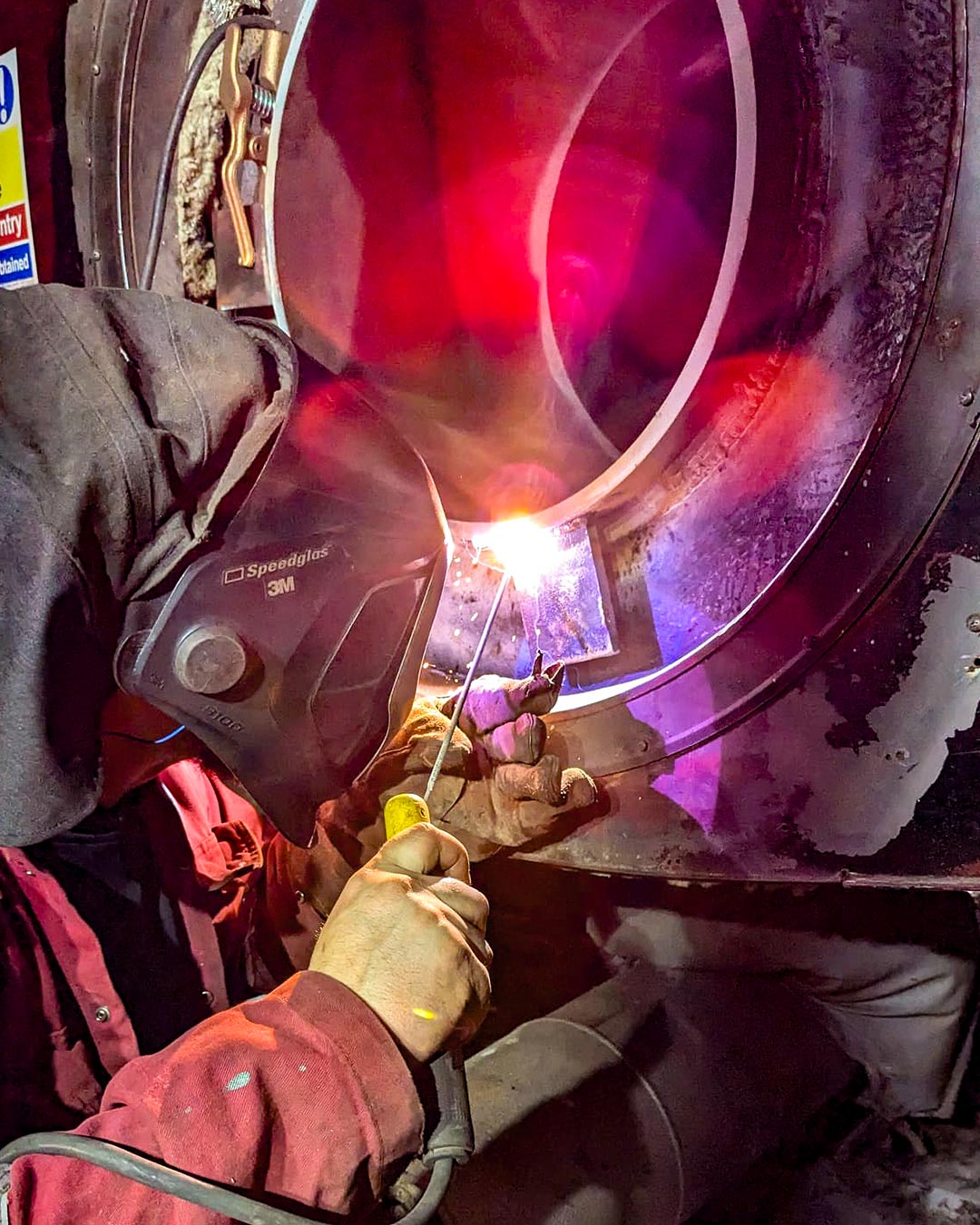
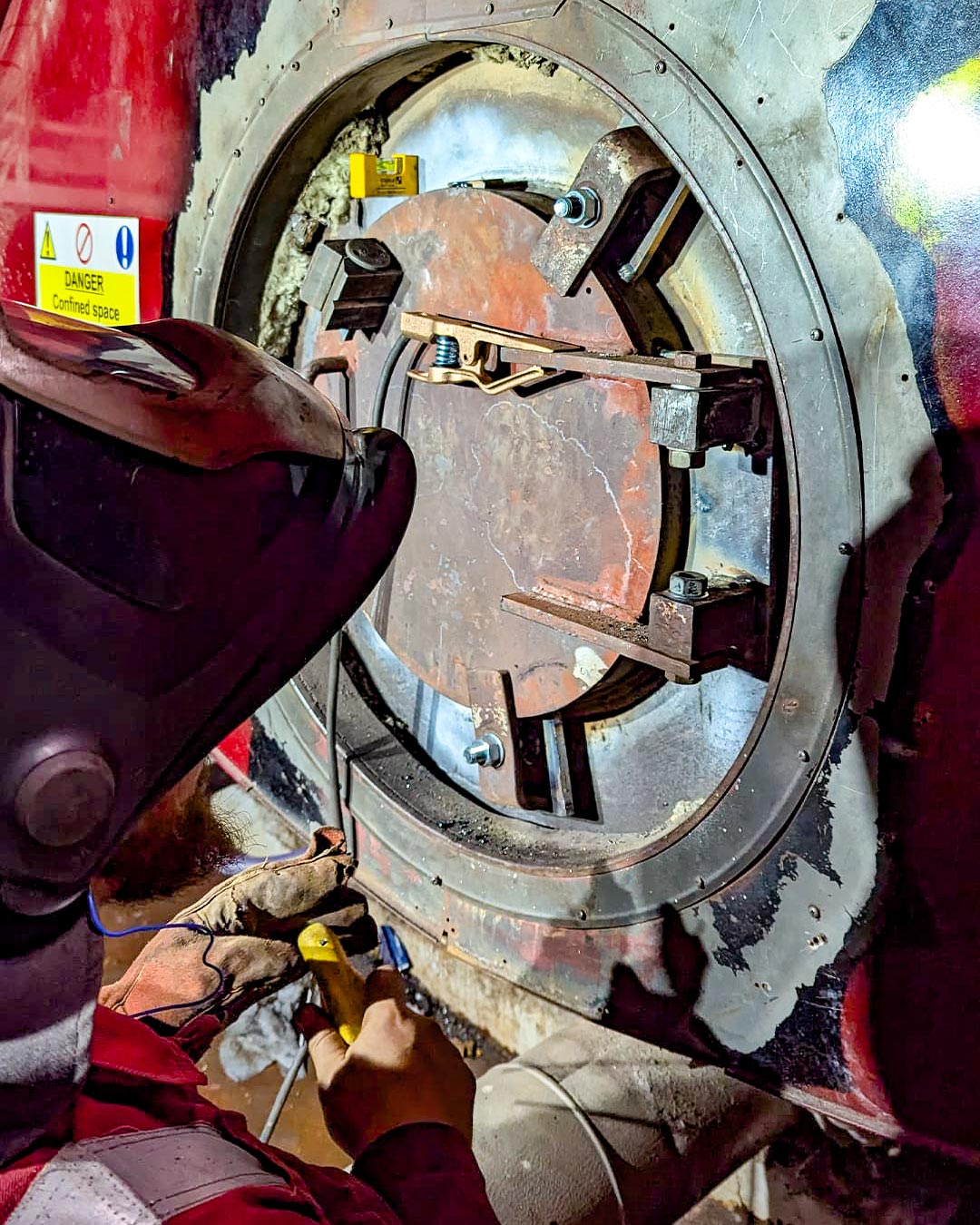
Initial Fit-Up and Inspection: The patch was tack-welded in place and inspected to verify proper alignment and compliance with engineering standards before final welding.
Welding and Finishing: The patch was fully welded and the welds were ground smooth, creating a seamless finish that restores the boiler’s structural integrity.
Post-Repair NDT Testing: The repaired area was subjected to further NDT inspection to verify the quality and integrity of the weld.
Hydrostatic Testing: A hydro test was performed as the final stage of quality assurance, ensuring the boiler was fully safe and operational before sign-off.
This D-patch procedure not only restored the boiler’s integrity but also demonstrated the effectiveness of combining thorough inspection, precise fabrication, and rigorous testing protocols to extend the equipment’s operational life.
NATIONWIDE INDUSTRIAL BOILER REPAIRS BY SPECIALIST ENGINEERS